


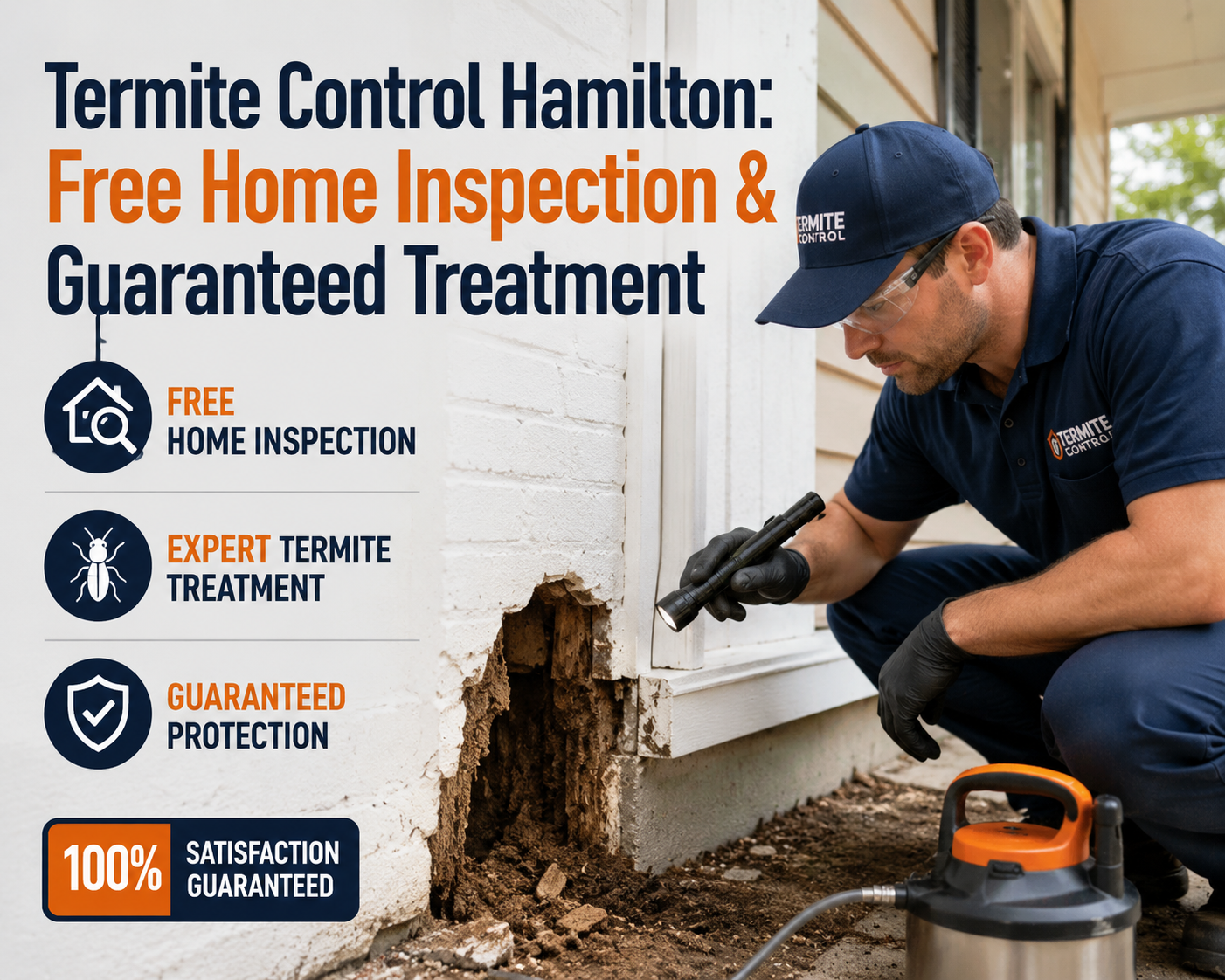
If you own a home in Hamilton, termites are not a distant threat; they are an active one. Every year, thousands of Canadian homeowners discover structural damage caused by termite colonies that had been silently feeding for months, sometimes years, before anyone noticed. The cost of that damage is rarely small. In serious cases, repairs run into the tens of thousands of dollars. What makes termite control in Hamilton such an urgent concern is that the problem is almost always invisible until it has already progressed well beyond the early stage.
This guide covers everything Hamilton homeowners need to know about termite infestations, from recognising the early warning signs to understanding your treatment options, prevention strategies, and what to look for when choosing a licensed termite exterminator in Hamilton.
Why Termites Are a Serious Problem in Hamilton
Hamilton’s climate creates favourable conditions for termite activity. The combination of warm summers, moist soil, and older residential housing stock gives subterranean termites exactly what they need to thrive: warmth, moisture, and plenty of wood. Subterranean termites, the most destructive species found across Canadian properties, build colonies underground and travel upward through mud tubes to reach the timber in your walls, floors, and roof framing.
Unlike other household pests, termites do not announce themselves. There are no droppings left on kitchen counters, no sounds at night, and no sudden appearances that prompt a phone call. A mature termite colony can consume roughly one kilogram of wood per day, and the damage compounds quietly behind your drywall and beneath your subfloor for months before any visible sign emerges.
That is what makes professional termite control in Hamilton so valuable and why a free home inspection is such an important first step.
Early Warning Signs of a Termite Infestation
Catching a termite problem early is the single most effective way to limit both damage and treatment costs. Hamilton homeowners should routinely check for the following indicators:
1. Mud Tubes Along Your Foundation or Walls
Subterranean termites construct pencil-thin tubes of soil and debris to travel between their underground colony and their food source. If you spot these running along your basement walls, exterior foundation, or wooden framing, a colony is almost certainly active nearby.
2. Hollow or Papery-Sounding Timber
Tap on skirting boards, door frames, and wooden flooring. If the sound is hollow or the surface feels thin under pressure, termites may have consumed the interior wood while leaving only a thin outer layer intact.
3. Tight-Fitting Doors and Windows
As termites damage the wooden frames of doors and windows, the timber warps and swells, making them difficult to open or close smoothly. This is easy to dismiss as seasonal shifting, but it warrants a closer inspection.
4. Discarded Wings Near Window Sills or Light Fixtures
Flying termites called swarmers shed their wings after finding a new nesting site. Small piles of translucent wings are a strong indicator that a new colony is establishing itself nearby.
5. Bubbling or Uneven Paint
Moisture produced by termite activity can cause paint to blister or lift from walls, mimicking the appearance of water damage.
If you notice any of these signs in your Hamilton home, do not wait. Early-stage infestations are significantly less expensive to treat than advanced ones.
Termite Treatment Options in Hamilton
Once an inspection confirms the presence of termites, a licensed pest control professional will recommend the most appropriate treatment method based on the severity of the infestation, the species involved, and your property’s construction type.
1. Chemical Soil Barriers
A liquid termiticide is applied around the perimeter of your home, creating a treated zone that kills termites on contact and prevents new colonies from accessing your structure. This method provides long-lasting protection, typically five to eight years.
2. Termite Bait Stations
Bait systems are installed in the ground around your property at regular intervals. Worker termites locate the bait, consume it, and carry it back to the colony, where it gradually eliminates the population at the source. Bait systems are a low-disruption option, particularly well-suited to properties where soil drilling is not feasible.
3. Physical Barriers
Used primarily in new construction, physical barriers made of stainless steel mesh or crushed granite are installed beneath slabs and around pipe penetrations to physically block termite entry. If you are building or renovating in Hamilton, this is one of the most cost-effective long-term investments you can make.
4. Localised Timber Treatments
For isolated infestations where termites have been found in a specific area, a targeted application of termiticide directly into the affected timber may be used in conjunction with broader colony-elimination strategies.
How Much Does Termite Control Cost in Hamilton?
Cost is understandably one of the first questions homeowners ask. Termite inspection in Hamilton typically ranges from $150 to $300, though many reputable providers offer a free initial inspection as part of their service commitment.
Treatment costs depend on the method and the extent of the infestation:
- Chemical soil barriers: $1,500-$3,500+, depending on linear footage
- Bait station systems: $800-$2,000 for installation, with annual monitoring fees
- Localised timber treatment: $300-$800 for minor, isolated infestations
Most standard Canadian home insurance policies do not cover termite damage, as it is classified as gradual deterioration rather than a sudden loss. This makes preventive treatment a genuinely worthwhile investment.
Termite Prevention Tips for Hamilton Homeowners
Professional treatment addresses an active infestation, but prevention is what keeps termites from returning.
1. Eliminate Wood-to-Soil Contact
Keep firewood stored away from your home’s exterior and use metal or concrete footings for any ground-level timber structures.
2. Improve Subfloor Ventilation
Poor ventilation beneath your home traps moisture, which attracts subterranean termites. Ensure subfloor vents are clear and functioning, and address any plumbing leaks or drainage issues promptly.
3. Clear Organic Debris From Around Your Foundation
Maintain a clear zone of at least 30 centimetres between organic garden material and your foundation to eliminate termite food sources and moisture.
4. Schedule Annual Termite Inspections
Even with no visible signs, a professional inspection once a year is strongly recommended. Trained inspectors use thermal imaging, moisture metres, and probing equipment to identify problems far earlier than a visual check alone.
FAQs About Termite Control in Hamilton
Q: How do I know if I have termites and not carpenter ants?
A: Termite damage looks smooth and layered from the inside; carpenter ant galleries are cleaner and often filled with sawdust-like frass. A professional inspection will confirm the species.
Q: How long does termite treatment take?
A: A chemical barrier application typically takes one to two days. Bait station systems require an initial installation visit followed by monthly or quarterly monitoring over several months.
Q: Can I treat termites myself with store-bought products?
A: Over-the-counter products may suppress surface activity but rarely reach the colony. Without eliminating the queen, the infestation continues. Professional treatment is the only reliable long-term solution.
Q: Is a free termite inspection actually thorough?
A: Yes, when offered by a reputable company. A proper free inspection covers accessible subfloor areas, exterior foundations, roof voids, and visible timber throughout the home.
Q: How soon after treatment can termites come back?
A: With a properly applied chemical barrier, most Hamilton homes are protected for five to eight years. Annual inspections are recommended to verify barrier integrity.
Conclusion
Termite control in Hamilton is not something to put off. The longer an infestation goes undetected, the more structural damage accumulates and the more expensive the repair bill becomes. With a professional inspection, the right treatment plan, and a simple prevention routine, your home can be thoroughly and reliably protected for years to come.
If you are ready to take action, Pesticon provides trusted termite control services across Hamilton, backed by licensed professionals, proven treatment methods, and a satisfaction guarantee. Book your free home inspection with Pesticon today and protect your home before the problem grows any further.
