


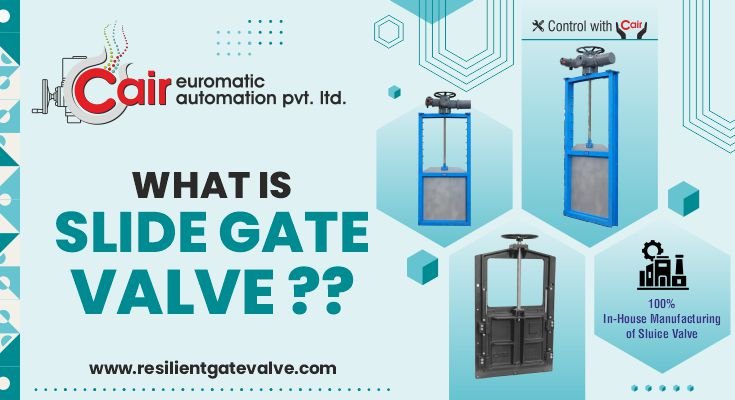
Water control is a critical part of infrastructure, agriculture, and industrial operations. One of the most effective devices used for this purpose is the sluice gate. It plays a key role in regulating water flow, preventing overflow, and maintaining system efficiency.
In this guide, we will explain the working, applications, and benefits of sluice gates in a simple and practical way.
What Is a Sluice Gate?
A sluice gate is a mechanical device used to control the flow of water by lifting or lowering a gate (barrier) inside a frame. It allows operators to start, stop, or regulate water flow as needed.
Sluice gates are commonly used in:
- Canals and irrigation systems
- Dams and reservoirs
- Water treatment plants
- Wastewater systems
They act as a reliable flow control solution in both small and large-scale applications.
Working Principle of a Sluice Gate
The working of a sluice gate is simple yet highly effective.
How It Works:
- The gate moves vertically within a fixed frame
- When the gate is raised, water flows through
- When the gate is lowered, the flow is reduced or completely stopped
Flow Control:
- Fully open → Maximum flow
- Partially open → Controlled flow
- Fully closed → No flow (tight sealing)
This mechanism allows precise control over water levels and flow rate.
Types of Operation
Sluice gates can be operated in different ways depending on the system requirements:
Manual Operation
- Operated using a handwheel or screw mechanism
- Simple and cost-effective
- Suitable for small systems
Motorized Operation
- Uses electric actuators for automatic control
- Enables remote operation
- Ideal for large and critical systems
Applications of Sluice Gates
Sluice gates are widely used across multiple industries:
1. Irrigation Systems
Help distribute water efficiently to agricultural fields.
2. Water Supply Systems
Control water flow in pipelines and reservoirs.
3. Wastewater Treatment Plants
Manage sewage, sludge, and treated water flow.
4. Dams and Hydropower Projects
Maintain water levels and regulate discharge.
5. Industrial Applications
Used for process control and effluent management.
6. Flood Control Systems
Prevent overflow and reduce flood risks.
Benefits of Sluice Gates
Sluice gates offer several advantages that make them essential in water management systems:
✔ Precise Flow Control
Allows accurate adjustment of water flow.
✔ Strong & Durable
Made from materials like Cast Iron, Mild Steel, and Stainless Steel for long life.
✔ Low Maintenance
Simple design ensures minimal maintenance requirements.
✔ Cost-Effective
Affordable solution for large-scale water control.
✔ Versatile Use
Suitable for irrigation, industrial, and municipal applications.
✔ Reliable Performance
Provides consistent operation even in harsh environments.
Why Sluice Gates Are Important
Sluice gates are not just mechanical components — they are essential tools for efficient water management. They help in:
- Conserving water resources
- Preventing flooding and damage
- Improving irrigation efficiency
- Supporting industrial operations
- Protecting the environment
Conclusion
A sluice gate is a simple yet powerful solution for controlling water flow. Its ability to regulate, stop, and manage water makes it a key component in modern infrastructure systems.
Whether used in irrigation, wastewater treatment, or industrial processes, sluice gates provide reliable, efficient, and long-lasting performance.
If you are looking for a dependable solution, choosing a high-quality sluice gate from a trusted manufacturer ensures better results and long-term benefits.
